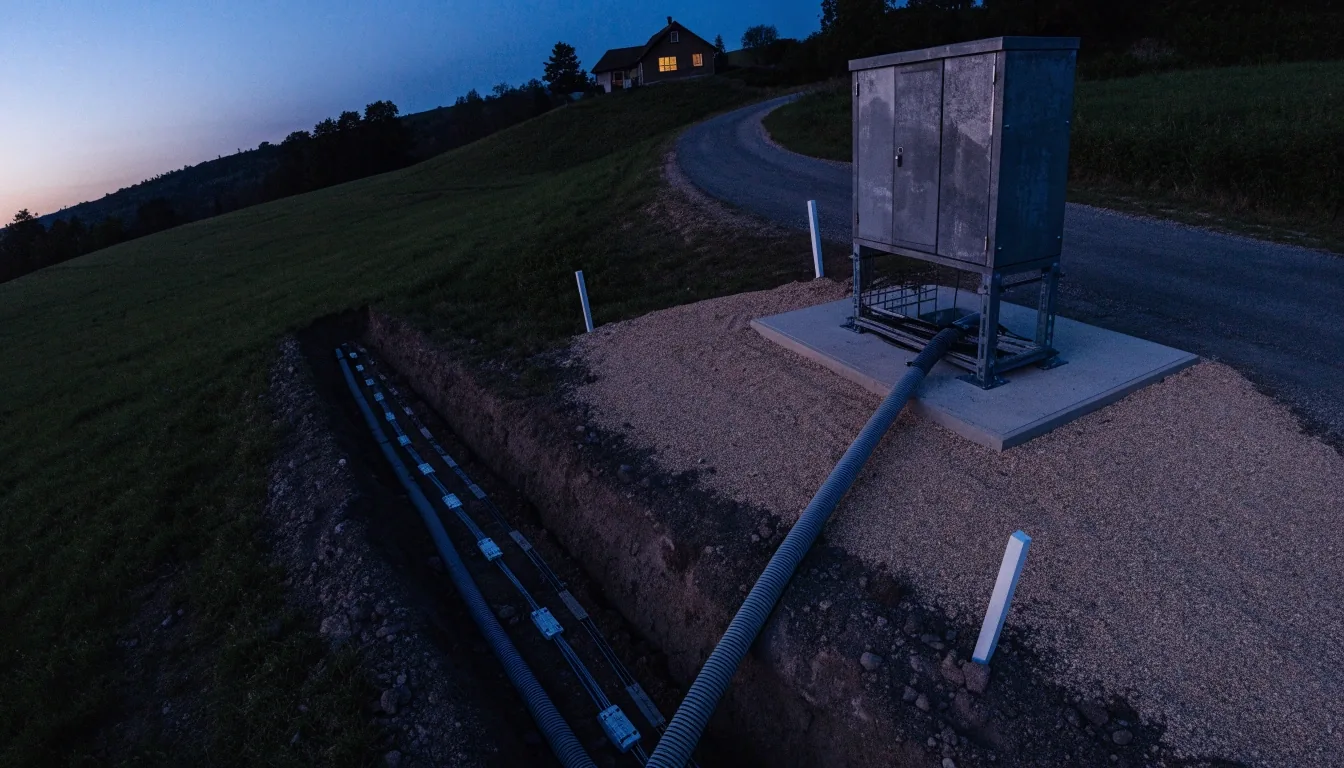

Aerial view of a fibre cable trunk along utility poles at dusk with one lit house on a ridge

Categories index

Browse broadband news by category

Every story on this site carries a category label, and this page groups them so you can follow one subject at a time. Nine categories are in use, from the physical gear behind a speed test to the federal rulemaking that governs it.

How the labels work

One story can sit under more than one label

A speed test result can be a Tech story about the instrument and a Spectrum story about the band that carried it. When the subject genuinely spans two desks, the story carries two labels and appears under both. Nothing is filed twice for volume.

Each label below explains what the desk covers and points to the current lead story in that category. Where a label links outward, the link opens the section page for that subject so you can read the full list.

Lit apartment windows across a night street with aerial cables crossing the frame

Tech

Tech covers the instruments and the physical layer. The current lead is Vermont's Speed Check tool, launched October 6, 2026, which lets residents run a speed test on their own connection and feeds the result into an aggregated coverage map. State officials say that map will help identify areas that need stronger internet service support, and it gives the desk a live read on what homes actually receive rather than what a provider advertises.

The category also carries the reported effort by Google, Meta, and Microsoft to secure backup land routes for internet traffic around the Red Sea, where submarine cables carry a large share of the traffic between Europe and Asia. When a route is at risk, the practical question for readers is not the map alone but which paths stay open.

Policy

Policy follows federal rulemaking with attention to procedure, because the order of steps often decides the outcome more than the headline does. The FCC's scheduled October 29, 2026 vote on barring Chinese labs from testing devices sold in the U.S. sits here.

The desk also tracks the proposal's effect on certification bodies in countries that do not offer reciprocal treatment to U.S. labs. That reciprocity question is the part most likely to shape where device makers send equipment for testing next.

FCC schedules a vote on banning Chinese labs from testing U.S. electronics

The vote is set for October 29, 2026. If it passes, equipment authorization for phones, routers, and other radio devices sold in the United States would have to run through labs the commission recognizes, and labs in countries that do not treat U.S. testing bodies the same way could lose that recognition. The story walks through what changes for manufacturers, what stays the same for buyers, and where the comment record has landed.

What the vote covers

Recognition of testing labs, the equipment authorization process, and the reciprocity standard applied to labs abroad.

Why the date matters

An October vote leaves room to publish final rules before the cycle of new device launches begins.

FCC Schedules a Vote on Banning Chinese Labs From Testing U.S. Electronics

Politics

Election-year telecommunications rules get their own category. The FCC is reviewing a request to loosen robocall restrictions before the midterms, including calls placed with AI-generated voices. The proposal touches the automatic dialing rules that most households meet as a ringing phone in the evening, and it asks whether a synthetic voice should count the same as a recorded human one.

This category tracks what those decisions mean for households in the final weeks of a campaign, when call volume climbs and the window to change the rules is short. Read it with the federal rulemaking coverage in Policy for the procedural side.

FCC Considers Easing Rules on Political Robocalls That Use AI Voices
A stone civic building facade at night with one lit upper window on an empty street
Rulemaking coverage follows the calendar: proposals, comment windows, and the vote itself.
A valley road at dusk with utility poles receding into fog

Space

Space covers orbital systems that reach consumers. The FCC cleared SpaceX to launch and operate 15,000 satellites for Starlink Mobile, with a waiver that eases satellite wireless service without a spectrum-leasing deal with a terrestrial carrier. The approval could put SpaceX in more direct competition with major U.S. mobile operators.

For readers, the useful question is what a satellite link can and cannot do next to a wired line at home. Orbital capacity helps most where trenching a fibre route is slowest or most expensive, and it behaves differently under rain, tree cover, and load. Pair this category with Spectrum when you want to know which frequencies a satellite service depends on.

FCC Approves SpaceX Starlink Mobile Satellites for Direct-to-Phone Service

Spectrum

Spectrum is where policy meets engineering. An NTIA official said the 7 GHz study should finish by December 2026, with the FCC expected to propose auction rules soon after and a review of the 1.6 GHz band to follow.

7 GHz
The study is expected to finish by December 2026. Auction rules would follow, and the band is widely watched because it sits next to spectrum already used for unlicensed devices, so the two have to be planned together.
1.6 GHz
A review of this band is expected to follow the 7 GHz work. Satellite operators and mobile carriers have both taken an interest in how it is shared, which makes the timing of the review worth watching.
Why the bands differ
Higher bands carry more data but travel shorter distances and need denser equipment. Lower bands reach farther with less infrastructure. Each story in this category explains what a band can realistically do before licenses are granted, so you can read auction news without guessing at the physics.
NTIA Says 7 GHz Band Study Should Finish This Year Ahead of Auction Rules

AI

AI covers both regulation and the public debate around it. Senator Maria Cantwell introduced an AI safety framework on October 7, 2026, and a Reuters/Ipsos poll found most U.S. voters believe the administration and Congress are not taking AI risks seriously enough. The category also includes how automated systems are used inside network operations, where fault detection and traffic shaping increasingly run without a person watching each decision.

The two halves belong together. A framework sets expectations for builders, while operations show what those expectations mean when a network is under load at nine in the evening.

Poll

Poll reads surveys for what they say about policy pressure, reporting the sample and question wording alongside the findings. That detail is the point: a number moves only as far as its wording allows.

The Reuters/Ipsos results on AI risk are the current example, showing dissatisfaction with how risks are handled and support for new government rules. When a later survey asks a differently worded question, the desk notes the change rather than stacking the two numbers as if they measured the same thing.

A furnished living room at night with a lamp and chair beside a curtained window

Survey questions about household internet service read differently depending on how the prompt frames the risk.

Media

Media covers broadcasters and their licenses. A U.S. judge is scheduled to hear Disney's request to block the FCC's early review of licenses tied to eight company-owned ABC stations. The dispute is about the regulator's authority to review a license outside the normal renewal cycle, and that question reaches past this one case.

If a commission can open a review early, the timing of every renewal becomes something a broadcaster has to plan around. The desk follows the hearing, the filings, and what the judge's reasoning would mean for stations in the next renewal window.

Disney Faces a Hearing Over an FCC License-Review Dispute

Telecom

Telecom is where carriers, auctions, and consumer service meet. The FCC said it will vote on October 29, 2026 on a new spectrum auction linked to direct-to-device services, intended to expand satellite-to-phone connectivity. Read it alongside the Starlink Mobile approval for the fuller picture, since the two decisions answer different parts of the same question about who can serve a phone where no tower reaches.

The desk keeps the consumer side in view: what changes on a bill, what a coverage map promises versus what a home actually gets, and when a speed test is the right way to check the difference.

FCC Seeks to Advance Direct-to-Device Spectrum Auctions
A wall jack and home router on a floor beside a night window with a coiled patch cable

Before comparing plans, it helps to know what your own equipment and wiring deliver at the wall.

Questions about the categories

If something here still does not match what you expect to find, the newsroom contact page is the fastest route to a correction.

Contact the newsroom

Why does a story appear under two categories?

Because the subject genuinely spans both. A federal vote that changes testing rules is Policy, but it also changes the instruments behind a speed test, so it carries a Tech label too. The page shows it under both rather than forcing it into one desk.

How current are the stories listed here?

Each category points to its lead story as of the last update, and the dates sit in the stories themselves. Votes, hearings, and study deadlines move, so a link marked for October 2026 may be followed by a newer piece on the same subject. The news archive lists everything newest first.

What is the difference between Spectrum and Telecom?

Spectrum follows the frequencies and the rules that decide who may use them. Telecom follows the companies and services built on top of those decisions. Auction news often belongs to both, and when it does, it appears in each with a different emphasis.

Where do survey results belong?

Poll holds the survey itself, including the sample size and how the question was phrased. When the same findings drive a regulatory argument, the story is cross-listed under the desk it affects, which is usually Policy or AI.

Can I follow just one category?

Yes. Every category page keeps its own running list, and the digest email gathers the week's stories across all nine. If you only care about Spectrum auctions or AI rulemaking, the section page for that desk is the quieter way to follow it.

A quiet night street outside a small newsroom with one warm lit window

Pick a category and start there

The archive holds every story newest first, and the digest collects the week's reporting in one message. Both are free, and both are written by the same desk that maintains these category pages.